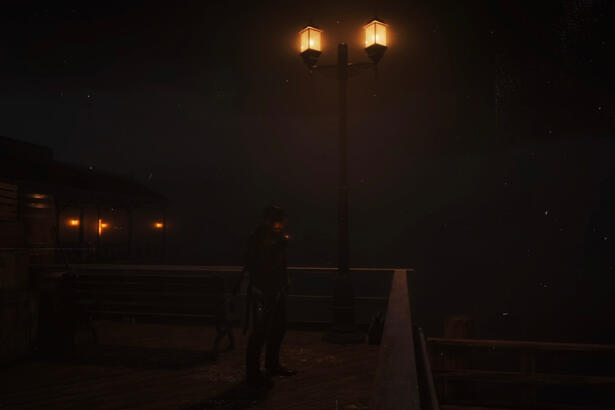
⌖ Vincent De la Haye
Nulli crede, omnibus utere. Nullis amicis, nullis hostibus. Cape aut occide, numquam utrumque. Si mori debes, cum virtute fac.
Full Name: Vincent Élias De la Haye.
Nicknames/Aliases: Vince, Vin, Élias Williams, The Viper.
Age: 31 in 1899. Born 1868.
Physical desc: 6'1, athletic build, red hair, green eyes, freckles, large facial scar, various other scars.
Ethnicity: English-French.
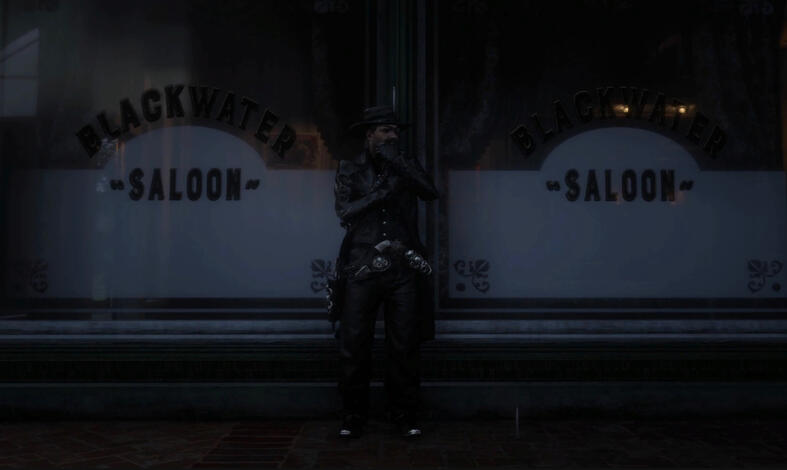
Occupation/Income: Bounty Hunter, Gambler, Moonshiner, Gun for Hire.
Dwelling: No fixed address. Vincent is nomadic and prefers to travel and see the land, setting up camp wherever work calls for him to be. Although he does favour West Elizabeth and will settle there for longer periods of time.Father: Élias De la Haye — French, politician. Born 1832, 36 at time of Vincent's birth, 67 in 1899.
Mother: Ethel Williams — English, medical student and suffragist. Born 1839, had Vincent at 29, died at 40 in 1879 when Vincent was 11.
Siblings: Vincent is an only child, although he believes his father had a child with another woman before meeting his mother.
Low Honour: Common European Viper (Black Adder).The viper represents a hidden threat, venomous evil, and a dark energy. It embodies the primal and kill-or-be-killed nature of the West, and Vincent himself. He is sceptical of almost everyone he comes across, immediately assessing them as either threat or prey - usually striking first and fast if a threat is sensed. Vincent is loyal to no one but himself, and is willing to use or betray people if it serves his own purpose. The shedding of a snake's skin symbolises rebirth and change; something that he had to experience in a way, in order to survive. Snakes are also excellent at navigating, even through the darkest of times.High Honour: Maned Wolf.Even when on a better path, Vincent is still an elusive and independent creature. His quiet nature often makes him a totem for those who feel misunderstood or prefer solitude. Neither true wolf nor true fox, the maned wolf can symbolise a balance between wilderness and civilisation. Aloof and steadfast, but loyal once trust is earned. Unlike other wolves, they do not form packs and prefer to hunt alone. Vincent utilises his intelligence, adaptability, intuition, and resourcefulness to survive. But he begins to use these qualities to assist people in need. He still has his teeth, however, unable to ever be a wholly 'good' man.


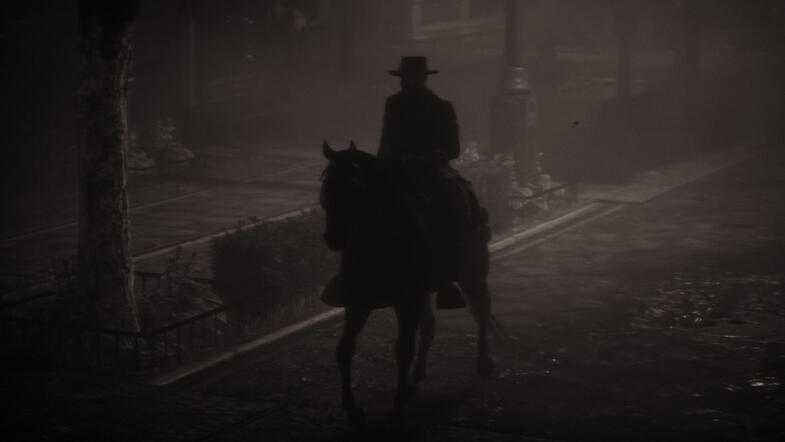
☽In the 1860s, London was a significant hub for French political exiles and activists opposing the authoritarian Second Empire of Napoleon III. Approximately 7,000 French political refugees were in Britain between 1848 and 1870, one of which being Élias De la Haye, who continued to engage in political debates and contribute to labour organisations after arriving in 1861. During this time, he met Ethel, Vincent’s mother.Vincent suffered in-utero Rubella exposure after his mother contracted the disease during pregnancy. His name, derived from the Latin word vincere — ‘to conquer, overcome, or defeat’, was given to him for surviving this despite the odds. His subsequent Congenital Rubella Syndrome (CRS) causes him to experience severe Apraxia of speech. This means that his brain struggles to plan and sequence the muscle movements necessary for speech, despite knowing exactly what he wants to say. Because of the enormous physical effort it takes to form words, along with his shame and frustration surrounding it (reinforced by his father’s abuse), he elects to remain mute almost all of the time. He can make general vocalisations such as those of pain, spurring a horse, or grunting, etc. Words will be attempted on a very rare occasion, if absolutely necessary. He finds it easier to speak when relaxed and if he feels safe enough with the other person.He was taught sign language at school and by his mother, mostly using it to communicate with her. He's decently fluent at it, but doesn’t find much use for it nowadays after realising most people who share his lifestyle don’t understand it. When he is able to use it, he sometimes gets stuck on signs he either never learned or has forgotten.Vincent was born and raised in England, in the world of the upper-middle class, where he never quite felt like he fit in. It was all too stiff and proper for him. He left for America at 18, after being cast out by his father for ‘disgracing’ their name with his disability. He endured plenty of period-typical ableism and abuse (particularly from his father) growing up, which only worsened after the death of his mother, leaving him without her defence and support. After initially trying to make his way in the US with honest work and odd jobs, he eventually fell into the more dangerous side of life, becoming something of an outlaw, and steadily formed into a skilled gunslinger and bounty hunter. He also makes money by gambling and overseeing an illicit moonshine operation on the side.His CRS also causes some behavioural challenges in him (high impulsivity, aggression) which frequently got him into trouble in his youth, and contributes to his lifestyle in adulthood. He has very limited vision in his left eye after an attack, and his hearing has also always suffered slightly due to his condition, so his general awareness and Dead Eye ability lean heavily on his good eye and his other senses.
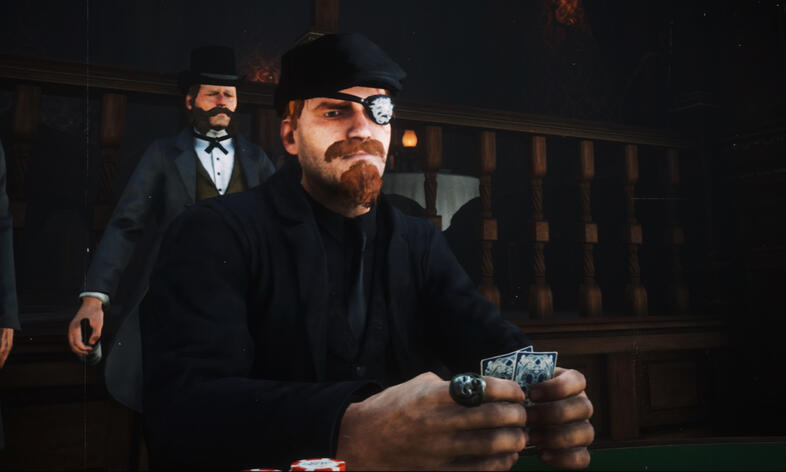
♤Vincent’s scar is the mark of a lesson learned the hard way, not a badge of honour.He acquired it in 1889, about ten years ago. He would have been 21, still somewhat fresh in America, but a little more sharp-eyed and dangerous by that point. In a gambling den in a mining town he had picked up some work in. Vincent, mostly communicating through glares and gestures, was playing five-card draw. He’d scraped together some money from previous jobs, his hands now calloused from manual labour, but his mind quicker than most gave him credit for. His silence often made people think he was slow, dumb. But he was winning modestly. Not enough to draw any heat, or so he thought.A man named Carter —a loud, red-faced claim-jumper with a reputation— was losing heavily. He’d thought the strange, quiet foreigner would be an easy target. Naturally, Carter accused him of cheating. Vincent didn’t bother trying to defend himself verbally. He just stared, slowly gathering his winnings and making a move to stand. That silent defiance was the final insult. As he turned to leave, Carter didn’t go for a gun, but for a heavy glass whiskey bottle from the table. It wasn’t a duel. It wasn’t even a fight.The bottle caught Vincent across the left side of his face with a sickening crunch. The glass shattered, and the force of the blow laid open his cheek from temple to jawline, only narrowly avoiding completely taking his eye out along with it.He went down, but not out. Half-blinded and bleeding profusely, that impulsivity and aggression of his exploded. He drove the broken neck of the same bottle into Carter’s thigh and slashed, severing an artery. And followed it by plunging his hunting knife into the side of Carter’s neck, twice, before he staggered out into the night. It was the first life he took, and would be far from the last.He nearly died of infection in a flophouse, a woman he doesn’t remember having tended the wound with phenol and a sewing needle. The eye never fully healed. The pain and light sensitivity are almost constant. The eyepatch came a little later, after he found that it significantly reduced his headaches, and focused his remaining vision.The incident was a turning point that helped forge the ruthless, preemptive gunslinger he is today. He doesn’t wait for a challenge. He doesn’t posture. If a threat is perceived, he ends it. The scar is a daily reminder. Never turn your back, never assume the fight will be fair.It was a cheap shot in a dirty room over a few dollars. He already knew that violence could come from anywhere, anytime, especially when he’s perceived as weak or different, but it reinforced his worldview: there is no fair play, only survival. His mutism makes him a target. The attack happened in part because he couldn’t —or wouldn’t— talk his way out of it.He has a deep hatred for cheats and bullies. He may even go out of his way to ruin any man who reminds him of Carter or his father, if not for justice, then for the visceral satisfaction of it.
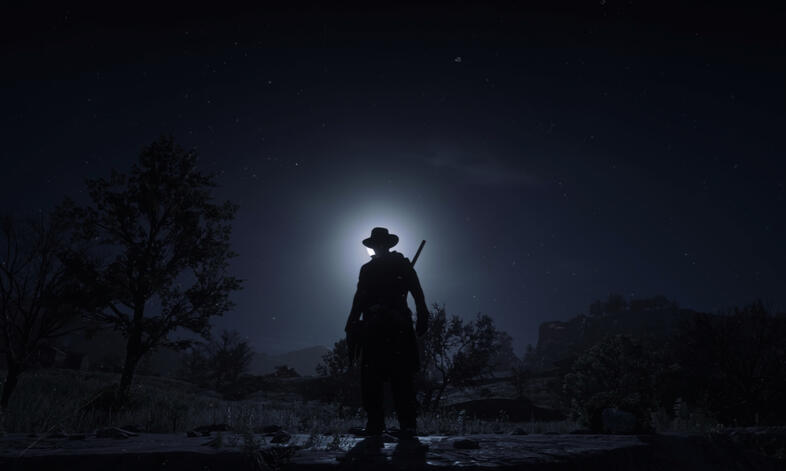
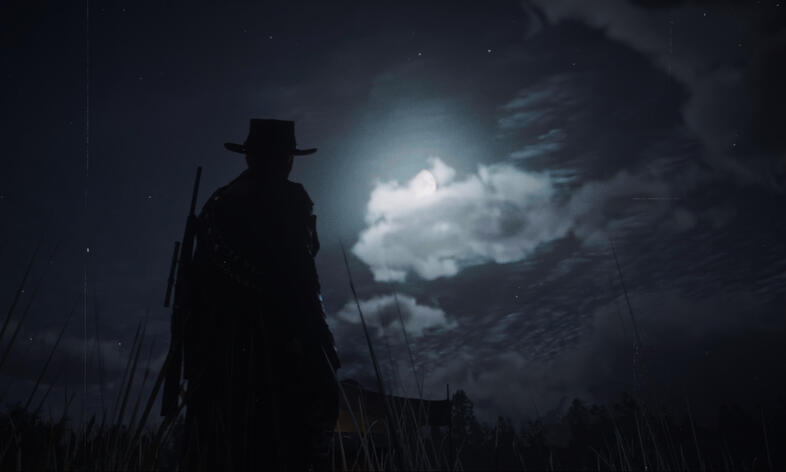
†Vincent was raised religious, but has warred with his faith for a long time. If God exists, he doesn't believe that He is merciful or loving. Why would God allow him to be born defective? Why would God take his mother away? Why would God allow all of the suffering and savagery in the world? He feels uneasy around churches, and uncomfortable with too much religious talk.In search of something to still believe in —some higher power or meaning to it all— he became more of a spiritual man. Believing in a living energy in all things seemed more tangible to him than a singular, distant deity. Some of the Indigenous and Pagan customs and beliefs that he has observed on his travels spoke to him, and he took to practising a few of his own rituals.He has always felt an inexplicable connection to the moon, for as long as he can remember, so that's what most of his rituals and offerings centre around. The moon, for Vincent, is not a God. It is a witness.It was the only constant in a life of upheaval — the same pale eye watching from the black velvet of the sky over the English countryside, over the churning Atlantic, and now over the vast, bleeding wounds of the American frontier. It sees him now, a ghost moving through the dust. It does not judge. It does not demand. It simply is. A silent, cyclical presence in a chaotic world. It feels more real to him than any scripture.His rituals are private, practical, and born of a desperate, unspoken hope.He feels a gravitational pull to it, a quiet resonance. On nights when the ghost of his father’s disdain is too loud, or the acts of violence he’s committed won’t stop replaying in his mind, he’ll go outside and simply stand in the moonlight. He doesn’t pray. He breathes. He imagines its cool, silver light leaching the fevered frustration from his blood, cooling the impulsive fire in his brain. In his mind, the moon governs tides, blood, and madness. By standing under it, he is trying to find his own still point in the pull.Guilt is a useless emotion. It doesn’t change what’s done. But a stain is a stain. After a job —especially a messy one— he seeks out water under the moon’s gaze.Before touching the water, he will take a small, personal item such as a spent casing from the gun he used, and place it at the water’s edge. A physical token of the act. The offering is not for forgiveness, but for acknowledgment. This happened.He then wades in, fully clothed if he must. He imagines the moonlit water not as holy water, but as a solvent, breaking down the invisible residue of violence. He visualises the darkness of the deed washing off of him, dissolving into the black water, to be carried away and diluted into nothingness by the current. The moon witnesses the contract: he leaves the deed here. He walks away lighter, ready to carry the necessary weight of the next one.He knows it’s not logical. A part of him, the boy who was taught catechism, thinks it’s pagan foolishness. But the man who lives by the gun needs a way to close the ledger. The church offered him confession and a promise of mercy from a God he can’t believe in. The moon and the river offer him a silent, physical ritual of release. A way to shed his skin, and move on. It is, in its own way, the only faith he has left.
𓉸Later on, around his mid 40s, Vincent's CRS causes him to develop type 1 diabetes and progressive arterial narrowing. With the lack of treatment for these conditions at the time, they eventually prove fatal a few years later.
Adder
Breed: American Standardbred.
Gender: Male.
Coat: Black.
Saddle: Upland Saddle.
Personality: Reliable, hard to spook, quick to settle.


Ghost
Breed: Turkoman.
Gender: Male.
Coat: Grey.
Saddle: Nacogdoches Saddle.
Personality: High energy, easily worked up, fast. Vin's favourite.


Corbeau
Breed: Norfolk Roadster.
Gender: Male.
Coat: Piebald Roan.
Saddle: Stenger Roping Saddle.
Personality: Sturdy, reserved, good workhorse.


All of Vince’s weapon equipment features snake motifs, along with snakes engraved into the pearl grips of his handguns. His weapons are also all fully customised to match.
When he is able to speak, Vincent has a predominantly British accent, with some subtle inflections of French. His voice is fairly monotone, and often rough from disuse. He is also decently fluent in French.
When signing his full name, Vince always abbreviates his middle name to E., as a subtle way to honour his mother’s name, rather than his father’s.
He has a black Labrador called Loki that travels around with him. He picked the dog up as a puppy after finding it alone in a home that appeared to be abandoned.
He stole his ring from one of his bounty targets.
Vincent is partial to using a Gravesend bolas to take down his bounties. It isn't very fun to be on the receiving end of. He has also been known to take cleavers and hatchets to people — usually when blinded by rage, or when that ugly part of him that enjoys the bloodshed gets ahold of him.
It was during a few months spent travelling as protection for a Native American couple that Vincent was taught how to hunt via bow and arrow. They taught him how to fashion basic items from different parts of the animals he killed. This is also where he learned most of what he knows of their beliefs.